
KidzDJ.com
Kids’ disco with mixed ages: how to choose the music
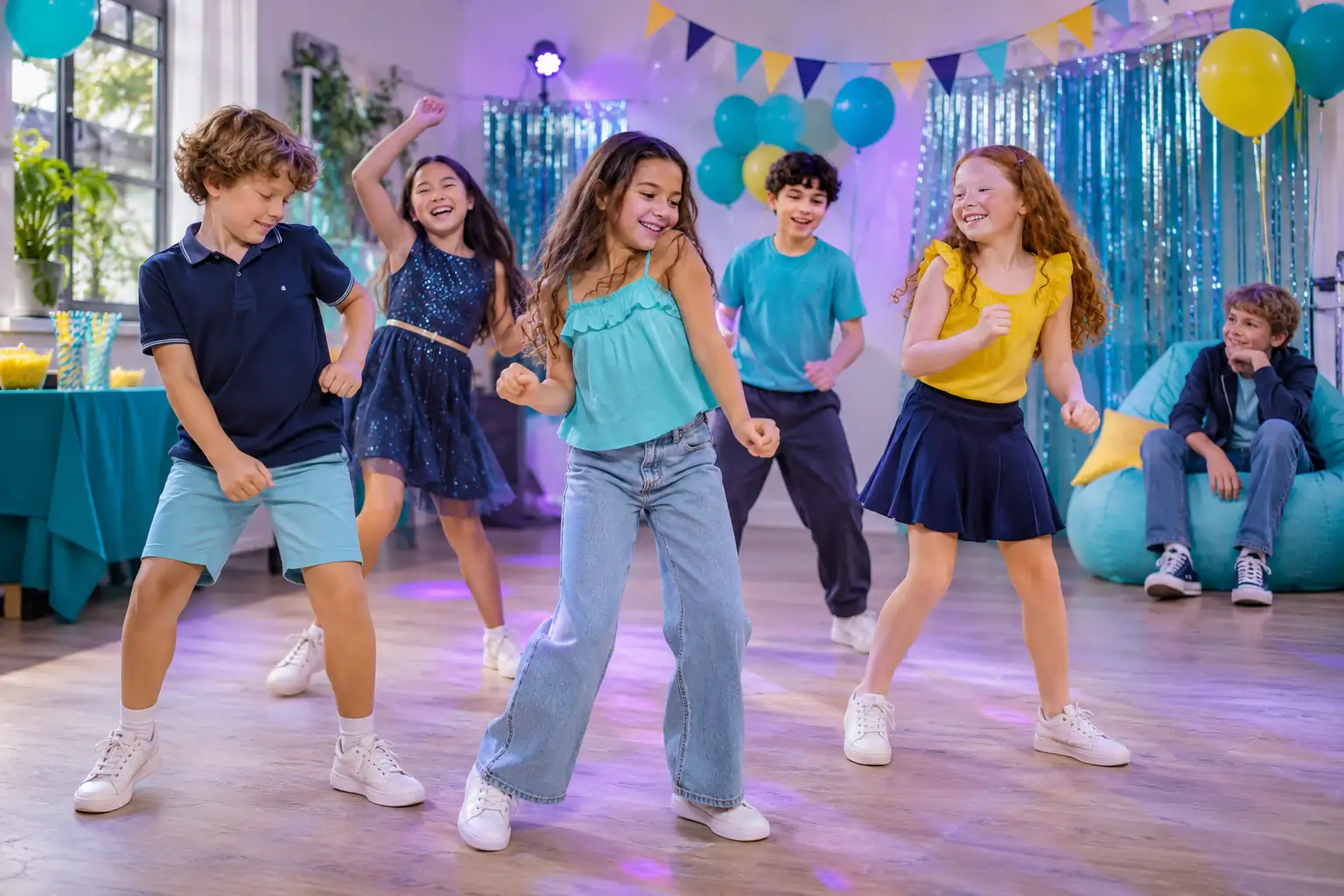
Start with what children enjoy together rather than their average age alone. Collect familiar music from different parts of the group and mix simple participation with free dancing. Discuss whether one shared session fits or separate moments would be more practical.
Describe the range, not just the average
A group aged six to eleven differs from a group of eight-year-olds. Give the youngest and oldest ages and approximate numbers in each age group. Explain whether they are relatives, classes or children who do not yet know each other. This helps frame useful questions about the programme.
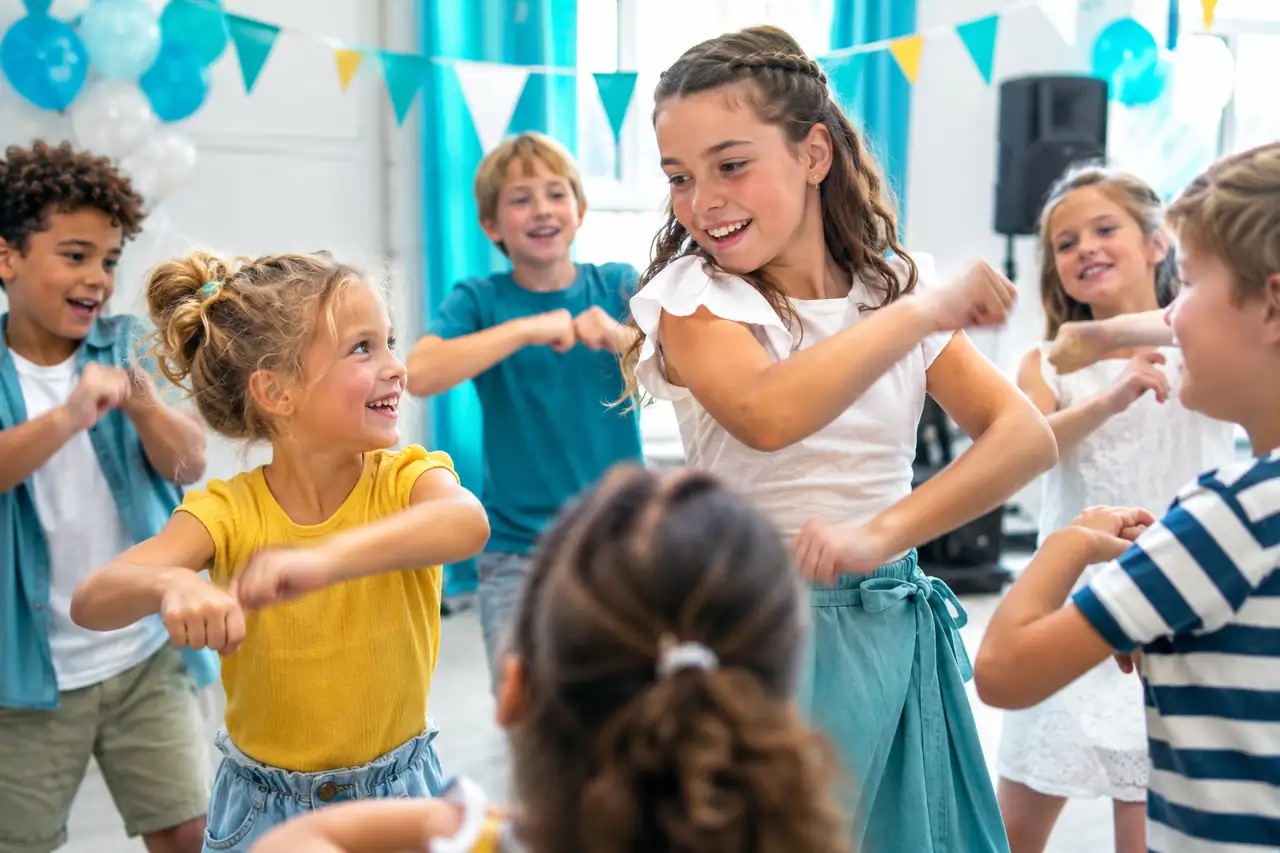
Age does not explain everything. A younger child may know the same songs as an older sibling. An older child may prefer watching first. Describe how the group likes to participate instead of assuming what children of a certain age should want.
Look for recognition across the group
Ask younger and older children for a few favourite songs so the most outspoken voices do not determine everything. Find overlapping preferences. A shared favourite offers a useful starting point without promising that everyone will enjoy every track.
Check lyrics and versions. A familiar chorus does not establish that the whole song suits the event. Share wishes and boundaries. Avoid a compulsory running order: within the agreement, the DJ needs to respond to the dance floor. Identify especially important songs rather than labelling the entire list essential.
Vary ways of taking part
A short, simple movement can bring the group together. Space for free dancing may follow. Discuss whether this balance fits the chosen DJ and show. It is an idea to agree, not a standard element included in every booking.
Do not make older children responsible for younger ones. Helping or demonstrating can be voluntary, but does not replace adult supervision. Avoid elimination games that repeatedly leave the same children sitting out. Those watching remain part of the group. Agree where sitting or drinking is practical.
Compare shared and separate sessions
One programme may fit when children share plenty of music and enjoy being together. With major differences, discuss whether an earlier session for younger children and a later one for older children works better. A wide age range does not automatically require separation.
Consider what the other group does meanwhile. Who supervises them, in which room and how do groups change over? Check performance time, pauses and any additional work. Two dance sessions are not automatically one booking divided in half without discussion.
Make the decision concrete with an example
A family party includes a few six-year-olds and more children aged ten and eleven. Gather favourites from both groups and ask whether they would like to start together. Discuss a familiar opening, free dancing and a practical drinks moment. If preferences differ greatly, check space and supervision before proposing separate groups.
There is no need to prescribe every minute. Agree who speaks for the organiser if changes are needed. Mention early departures too, so that a shared finale is not planned after some children have left.
Turn the information into an enquiry
Send ages, numbers, how well children know each other, favourites, songs to avoid and requested timings. Explain whether you prefer a shared session or want to explore separate moments. Identify supervisors and the contact person.
Meet the KidzDJ artists and describe any artist choice as a preference. Start with the group; the artist, performance and times then need joint confirmation.
Planning this at school? Explore our school party DJ shows and discuss how to divide the groups.
Together or separate sessions?
Together: discuss whether ages, interests and space suit one programme. Share music several children recognise.
Separately: explore this when differences are large or groups attend at different times. Agree show time, changeover and supervision separately. Splitting is confirmed only once arrangements and price are agreed.
Frequently asked questions
Must younger and older children dance separately?
No. Consider shared music, familiarity and preferred participation. Separation is useful only when it helps practically and suits the group.
Can older children supervise younger ones?
They may help voluntarily, but do not automatically become responsible. Arrange adult supervision and guidance.
Are two dance sessions included as standard?
No. Discuss the performance, timings, pauses and any extra work before dividing the programme.